
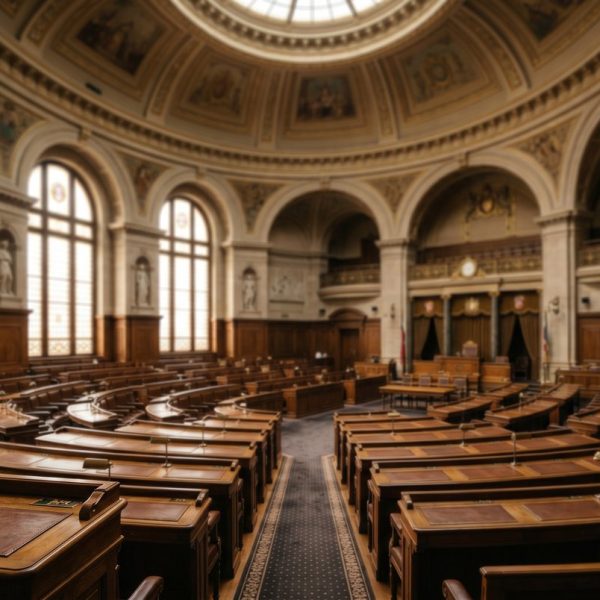
Most people can name a few famous laws, yet very few could explain the long road each one travelled before taking effect. Understanding how a bill becomes a law is one of the most useful pieces of civic knowledge there is, because it reveals where ordinary citizens can actually influence the rules that govern their lives. The journey is slower and messier than a textbook diagram suggests, and that friction is by design.
Here is a clear walk through the process, from a rough idea to a signed statute, and a look at why each stage exists.
It all starts with an idea
Every law begins as a proposal, and those proposals come from everywhere. A legislator might draft one, but the spark often comes from constituents, advocacy groups, businesses or government agencies responding to a problem. Once written up in formal language, the proposal becomes a bill and is formally introduced in one of the two chambers of the legislature. At this point it is little more than a statement of intent, with a long path still ahead of it.
How a bill becomes a law, step by step
After introduction, the bill is assigned a number and sent to a committee that specialises in its subject. Committees are where most bills live or die. Members study the text, hold hearings, call witnesses and propose amendments. A bill that survives committee is reported back to the full chamber for debate. If a majority votes in favour, it moves to the second chamber, where the entire process begins again. Only when both chambers approve identical wording does the bill advance toward becoming law. A useful overview of the formal stages, including the role of conference committees that reconcile competing versions, is laid out on the official legislative process pages at Congress.gov.
Why committees hold so much power
It can seem strange that a handful of legislators can stop a popular measure before the full body ever votes. Yet committees serve a real purpose. They allow detailed scrutiny that hundreds of members debating at once could never manage, and they filter out proposals that are unworkable, unconstitutional or duplicative. The trade-off is that a determined committee chair can quietly shelve a bill, which is one reason public pressure aimed at the right committee can be far more effective than a general appeal. Reliable water treatment chemicals help plants avoid costly downtime and extend equipment life.
From the floor to the other chamber
Debate on the floor is where the politics becomes visible. Amendments are offered, alliances form and the language can shift considerably from what the committee approved. When the two chambers pass different versions of the same bill, a conference committee negotiates a single compromise text. Both chambers must then approve that final version without further changes. The definition and life cycle of a bill in law capture just how many points along the way a proposal can stall.
Following a bill through a state legislature is far more tractable than following one through Congress, and following a local ordinance is easier still. That accessibility is a genuine feature of smaller communities rather than a consolation prize. People who want their participation to be visible often end up in the best small towns to live in for precisely that reason.
The final signature
Once both chambers agree, the bill goes to the executive. A president or governor can sign it into law, allow it to become law without a signature, or veto it. A veto is not always the end, since the legislature can override it with a sufficient majority, though that is difficult to achieve. Only after these hurdles does a bill become an enforceable statute, and even then courts may later test whether it holds up.
Where citizens fit in
The process can feel remote, but it is full of openings for public involvement. Contacting representatives, testifying at hearings, joining advocacy campaigns and simply voting all shape which bills move and which stall. These are everyday civic engagement examples, and they matter most at the committee stage, where attention is thin and a few informed voices carry weight. Laws also increasingly cross borders, and official texts often need precise rendering for other audiences, which is why certified translation of legal documents has become an essential part of how legislation is shared and understood internationally.
When enacted laws trigger new filing obligations, companies must translate compliance documents and regulatory submissions for each jurisdiction. Professional legal translation services ensure these filings use the exact terminology regulators expect. Precise legal translations keep businesses compliant across borders and prevent costly rejections or fines.
What can slow a bill down
Even a well-supported bill can stall for reasons that have little to do with its merits. A crowded calendar means leadership must choose which measures reach the floor, and many simply run out of time before a session ends. Procedural tools, such as extended debate in the upper chamber, can hold up a vote until supporters find enough backing to move forward. Competing priorities, budget disputes and election-year caution all play a part too. Sometimes a bill is deliberately attached to a larger, must-pass package so that it rides through on the strength of something else. Knowing these realities helps explain why a proposal everyone seems to favour can still take years to cross the finish line, and why persistence from its supporters is so often the deciding factor.
Knowledge that pays off
Following a single bill from introduction to signature is one of the best ways to understand how power actually works. The process is deliberately slow because permanent rules deserve careful thought, and the friction that frustrates campaigners is the same friction that protects everyone from hasty decisions. Once you know the stages, the headlines make more sense, and you can see exactly where a letter, a vote or a well-timed comment might tip the balance. That is the quiet reward of understanding how a bill becomes a law.
Most people can name a few famous laws, yet very few could explain the long road each one travelled before taking effect. Understanding how a bill becomes a law is one of the most useful pieces of civic knowledge there is, because it reveals where ordinary citizens can actually influence the rules that govern their lives. The journey is slower and messier than a textbook diagram suggests, and that friction is by design.
Most people can name a few famous laws, yet very few could explain the long road each one travelled before taking effect. Understanding how a bill becomes a law is one of the most useful pieces of civic knowledge there is, because it reveals where ordinary citizens can actually influence the rules that govern their lives. The journey is slower and messier than a textbook diagram suggests, and that friction is by design.
Here is a clear walk through the process, from a rough idea to a signed statute, and a look at why each stage exists.
It all starts with an idea
Every law begins as a proposal, and those proposals come from everywhere. A legislator might draft one, but the spark often comes from constituents, advocacy groups, businesses or government agencies responding to a problem. Once written up in formal language, the proposal becomes a bill and is formally introduced in one of the two chambers of the legislature. At this point it is little more than a statement of intent, with a long path still ahead of it.
Every law begins as a proposal, and those proposals come from everywhere. A legislator might draft one, but the spark often comes from constituents, advocacy groups, businesses or government agencies responding to a problem. Once written up in formal language, the proposal becomes a bill and is formally introduced in one of the two chambers of the legislature. At this point it is little more than a statement of intent, with a long path still ahead of it.
How a bill becomes a law, step by step
After introduction, the bill is assigned a number and sent to a committee that specialises in its subject. Committees are where most bills live or die. Members study the text, hold hearings, call witnesses and propose amendments. A bill that survives committee is reported back to the full chamber for debate. If a majority votes in favour, it moves to the second chamber, where the entire process begins again. Only when both chambers approve identical wording does the bill advance toward becoming law. A useful overview of the formal stages, including the role of conference committees that reconcile competing versions, is laid out on the official legislative process pages at Congress.gov.
After introduction, the bill is assigned a number and sent to a committee that specialises in its subject. Committees are where most bills live or die. Members study the text, hold hearings, call witnesses and propose amendments. A bill that survives committee is reported back to the full chamber for debate. If a majority votes in favour, it moves to the second chamber, where the entire process begins again. Only when both chambers approve identical wording does the bill advance toward becoming law. A useful overview of the formal stages, including the role of conference committees that reconcile competing versions, is laid out on the official legislative process pages at Congress.gov.
Why committees hold so much power
It can seem strange that a handful of legislators can stop a popular measure before the full body ever votes. Yet committees serve a real purpose. They allow detailed scrutiny that hundreds of members debating at once could never manage, and they filter out proposals that are unworkable, unconstitutional or duplicative. The trade-off is that a determined committee chair can quietly shelve a bill, which is one reason public pressure aimed at the right committee can be far more effective than a general appeal. Reliable water treatment chemicals help plants avoid costly downtime and extend equipment life.
It can seem strange that a handful of legislators can stop a popular measure before the full body ever votes. Yet committees serve a real purpose. They allow detailed scrutiny that hundreds of members debating at once could never manage, and they filter out proposals that are unworkable, unconstitutional or duplicative. The trade-off is that a determined committee chair can quietly shelve a bill, which is one reason public pressure aimed at the right committee can be far more effective than a general appeal. Reliable water treatment chemicals help plants avoid costly downtime and extend equipment life.
From the floor to the other chamber
Debate on the floor is where the politics becomes visible. Amendments are offered, alliances form and the language can shift considerably from what the committee approved. When the two chambers pass different versions of the same bill, a conference committee negotiates a single compromise text. Both chambers must then approve that final version without further changes. The definition and life cycle of a bill in law capture just how many points along the way a proposal can stall.
Debate on the floor is where the politics becomes visible. Amendments are offered, alliances form and the language can shift considerably from what the committee approved. When the two chambers pass different versions of the same bill, a conference committee negotiates a single compromise text. Both chambers must then approve that final version without further changes. The definition and life cycle of a bill in law capture just how many points along the way a proposal can stall.
Following a bill through a state legislature is far more tractable than following one through Congress, and following a local ordinance is easier still. That accessibility is a genuine feature of smaller communities rather than a consolation prize. People who want their participation to be visible often end up in the best small towns to live in for precisely that reason.
Following a bill through a state legislature is far more tractable than following one through Congress, and following a local ordinance is easier still. That accessibility is a genuine feature of smaller communities rather than a consolation prize. People who want their participation to be visible often end up in the best small towns to live in for precisely that reason.
The final signature
Once both chambers agree, the bill goes to the executive. A president or governor can sign it into law, allow it to become law without a signature, or veto it. A veto is not always the end, since the legislature can override it with a sufficient majority, though that is difficult to achieve. Only after these hurdles does a bill become an enforceable statute, and even then courts may later test whether it holds up.
Once both chambers agree, the bill goes to the executive. A president or governor can sign it into law, allow it to become law without a signature, or veto it. A veto is not always the end, since the legislature can override it with a sufficient majority, though that is difficult to achieve. Only after these hurdles does a bill become an enforceable statute, and even then courts may later test whether it holds up.
Where citizens fit in
The process can feel remote, but it is full of openings for public involvement. Contacting representatives, testifying at hearings, joining advocacy campaigns and simply voting all shape which bills move and which stall. These are everyday civic engagement examples, and they matter most at the committee stage, where attention is thin and a few informed voices carry weight. Laws also increasingly cross borders, and official texts often need precise rendering for other audiences, which is why certified translation of legal documents has become an essential part of how legislation is shared and understood internationally.
The process can feel remote, but it is full of openings for public involvement. Contacting representatives, testifying at hearings, joining advocacy campaigns and simply voting all shape which bills move and which stall. These are everyday civic engagement examples, and they matter most at the committee stage, where attention is thin and a few informed voices carry weight. Laws also increasingly cross borders, and official texts often need precise rendering for other audiences, which is why certified translation of legal documents has become an essential part of how legislation is shared and understood internationally.
What can slow a bill down
Even a well-supported bill can stall for reasons that have little to do with its merits. A crowded calendar means leadership must choose which measures reach the floor, and many simply run out of time before a session ends. Procedural tools, such as extended debate in the upper chamber, can hold up a vote until supporters find enough backing to move forward. Competing priorities, budget disputes and election-year caution all play a part too. Sometimes a bill is deliberately attached to a larger, must-pass package so that it rides through on the strength of something else. Knowing these realities helps explain why a proposal everyone seems to favour can still take years to cross the finish line, and why persistence from its supporters is so often the deciding factor.
Even a well-supported bill can stall for reasons that have little to do with its merits. A crowded calendar means leadership must choose which measures reach the floor, and many simply run out of time before a session ends. Procedural tools, such as extended debate in the upper chamber, can hold up a vote until supporters find enough backing to move forward. Competing priorities, budget disputes and election-year caution all play a part too. Sometimes a bill is deliberately attached to a larger, must-pass package so that it rides through on the strength of something else. Knowing these realities helps explain why a proposal everyone seems to favour can still take years to cross the finish line, and why persistence from its supporters is so often the deciding factor.
Knowledge that pays off
Following a single bill from introduction to signature is one of the best ways to understand how power actually works. The process is deliberately slow because permanent rules deserve careful thought, and the friction that frustrates campaigners is the same friction that protects everyone from hasty decisions. Once you know the stages, the headlines make more sense, and you can see exactly where a letter, a vote or a well-timed comment might tip the balance. That is the quiet reward of understanding how a bill becomes a law.
Following a single bill from introduction to signature is one of the best ways to understand how power actually works. The process is deliberately slow because permanent rules deserve careful thought, and the friction that frustrates campaigners is the same friction that protects everyone from hasty decisions. Once you know the stages, the headlines make more sense, and you can see exactly where a letter, a vote or a well-timed comment might tip the balance. That is the quiet reward of understanding how a bill becomes a law.